The best pet camera for tortoise UVB lamp tracking is one that combines crisp 2K or 4K video, reliable time-lapse or 24/7 recording, and a wide enough field of view to capture both the basking spot and the cool side of the enclosure. Tortoise keepers need to verify that UVB bulbs are actually firing on schedule, confirm basking behavior under the lamp, and document subtle shell growth over weeks and months. Our top pick for most keepers is the eufy Security 4K Indoor Camera E30 because it records locally without a subscription and delivers enough resolution to spot scute boundaries clearly. Below, we compare five cameras that hold up in humid, warm vivarium conditions and explain how to position them for the cleanest growth data.
Why a Pet Camera Beats Manual Logbooks for Tortoise Husbandry
Tortoises are creatures of routine, but their routines play out on a slow scale. A juvenile Hermann's might only add a millimeter of carapace length per month, and UVB output from a fluorescent tube drifts long before the bulb visibly dims. Eyeballing either is unreliable. A dedicated pet camera for tortoise UVB lamp tracking turns your enclosure into a continuous dataset: you get timestamped clips showing exactly when the lamp ballast clicks on, how long your tortoise stays under it, and a frame-by-frame visual record of pyramiding, scute shedding, and overall growth.
The right camera also catches off-schedule behavior. If your reptile suddenly starts hiding from the basking zone, that's often the first sign of a failing UVB tube, a thermostat glitch, or early respiratory issues. Without video, you'd notice days or weeks later. With a good indoor cam, you'll see it the same day.
What to Look For in a Tortoise Enclosure Camera
Not every indoor security camera survives the demands of a heated, humid table or vivarium. Here's what actually matters when you're shopping specifically for reptile monitoring rather than dog or cat watching.
- Resolution (2K minimum, 4K preferred): Shell scute lines, beak overgrowth, and eye clarity all need fine detail. 1080p is fine for movement, but growth tracking benefits from higher pixel density.
- Wide-angle or pan/tilt lens: A 110°+ field of view captures both the basking and cool zones. Pan/tilt models let you reposition without climbing into the enclosure.
- Time-lapse or continuous recording: Motion-only clips miss long basking sessions. You want a camera that can record on a schedule or store hours of footage locally.
- Heat and humidity tolerance: Mount the camera outside the hot zone. Even "indoor" cameras can struggle above 95°F or in 80%+ humidity if placed directly under a heat lamp.
- Local storage or no-subscription option: Cloud-only plans get expensive fast when you want months of growth footage.
- UVB-friendly exposure: Some sensors blow out highlights under a 10.0 UVB tube. Cameras with HDR or manual exposure handle this better.
Comparison Table: Top Cameras for Tortoise Monitoring in 2026
| Camera | Resolution | Pan/Tilt | Local Storage | Best For |
|---|---|---|---|---|
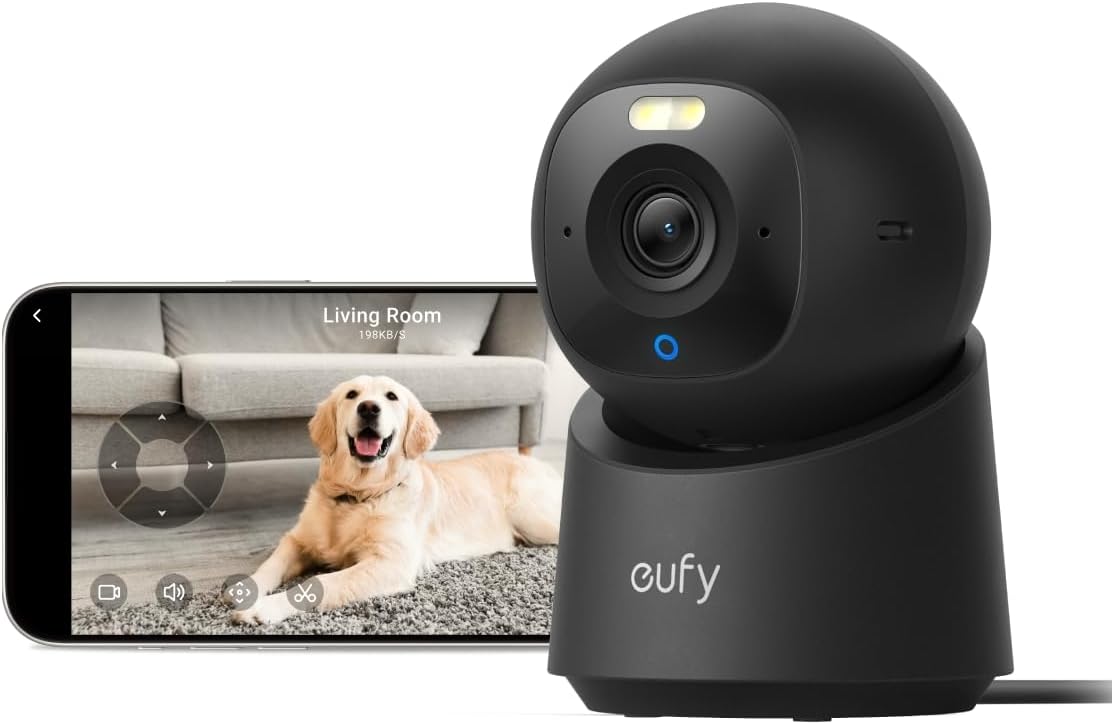
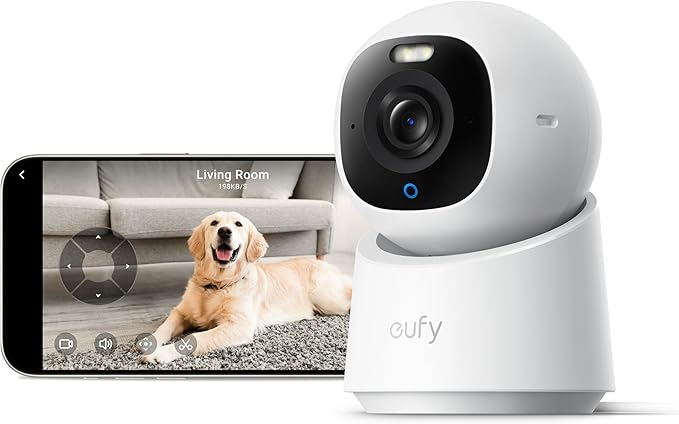
| eufy Security 4K Indoor Camera E30 | 4K | Yes | Yes (microSD) | Shell growth detail, no subscription |
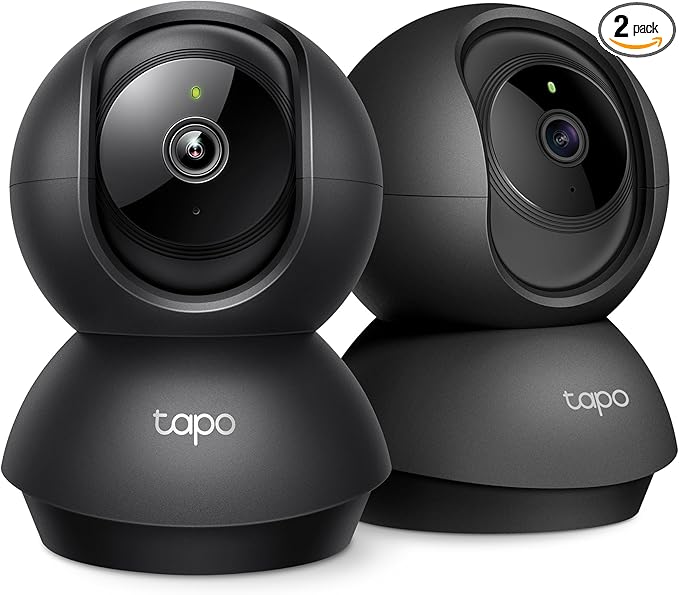
| Tapo 2K Pan/Tilt | 2K | Yes (360°) | Yes (microSD) | Budget UVB cycle tracking |
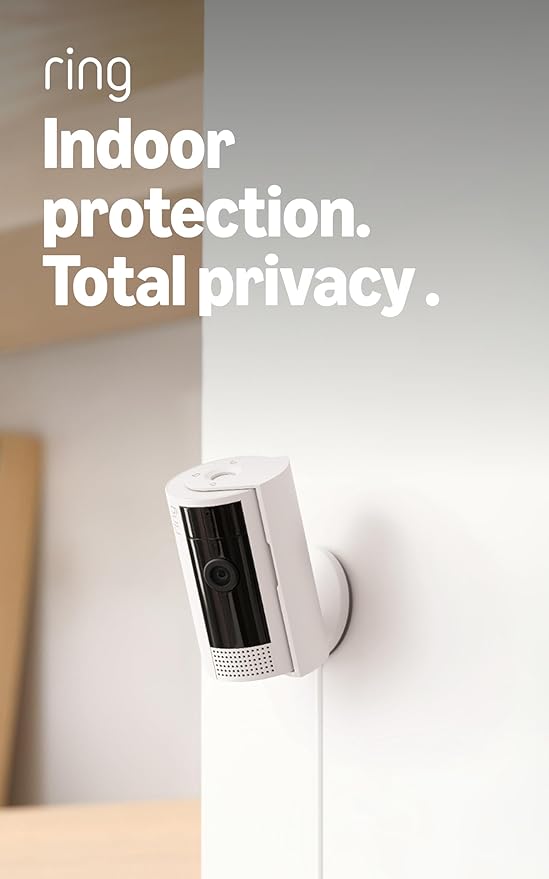
| Ring Indoor Cam (2nd Gen) | 1080p | No | Subscription only | Alexa-integrated alerts |
| Blink Mini 2K+ | 2K | No | Yes (with Sync Module) | Compact placement near vivarium |
| Furbo 360° Dog Camera | 1080p | Yes (360°) | Cloud (Nanny plan) | Owners with both dogs and tortoises |
Top Pet Camera Picks for Tortoise UVB and Shell Tracking
1. eufy Security 4K Indoor Camera E30 — Best Overall for Shell Growth Documentation
The eufy E30 is the standout choice if you're serious about logging shell growth month over month. Its 4K sensor resolves individual scute boundaries cleanly even from 18 inches away, which means a fixed weekly time-lapse from the same angle will produce a comparable image series you can actually measure against. Pan and tilt let you swing between the basking dome and the substrate-level hide without remounting. Critically for tortoise keepers, the E30 supports local microSD recording with no subscription, so you can archive months of footage cheaply. Pair it with a smart plug on your UVB fixture and the camera will visually confirm every lamp cycle. Check the eufy E30 on Amazon.
2. Tapo 2K Indoor Pan/Tilt — Best Budget Pick for UVB Cycle Verification
If your priority is simply confirming that your UVB tube is firing on its timer and that your tortoise is actually basking under it, the Tapo 2K Pan/Tilt does that job for a fraction of the price of premium cameras. The 360° pan and 114° tilt cover a typical 4x2 foot tortoise table from a single corner mount. 2K resolution is enough to see shell condition and behavior clearly, even if it won't quite resolve the finest growth lines. It accepts microSD cards up to 512GB, so continuous recording is realistic. Set it to record a 60-second clip every hour and you'll have a full UVB-cycle log without paying for cloud storage. View the Tapo 2K on Amazon.
3. Ring Indoor Cam (2nd Gen) — Best for Alexa-Driven Husbandry Routines
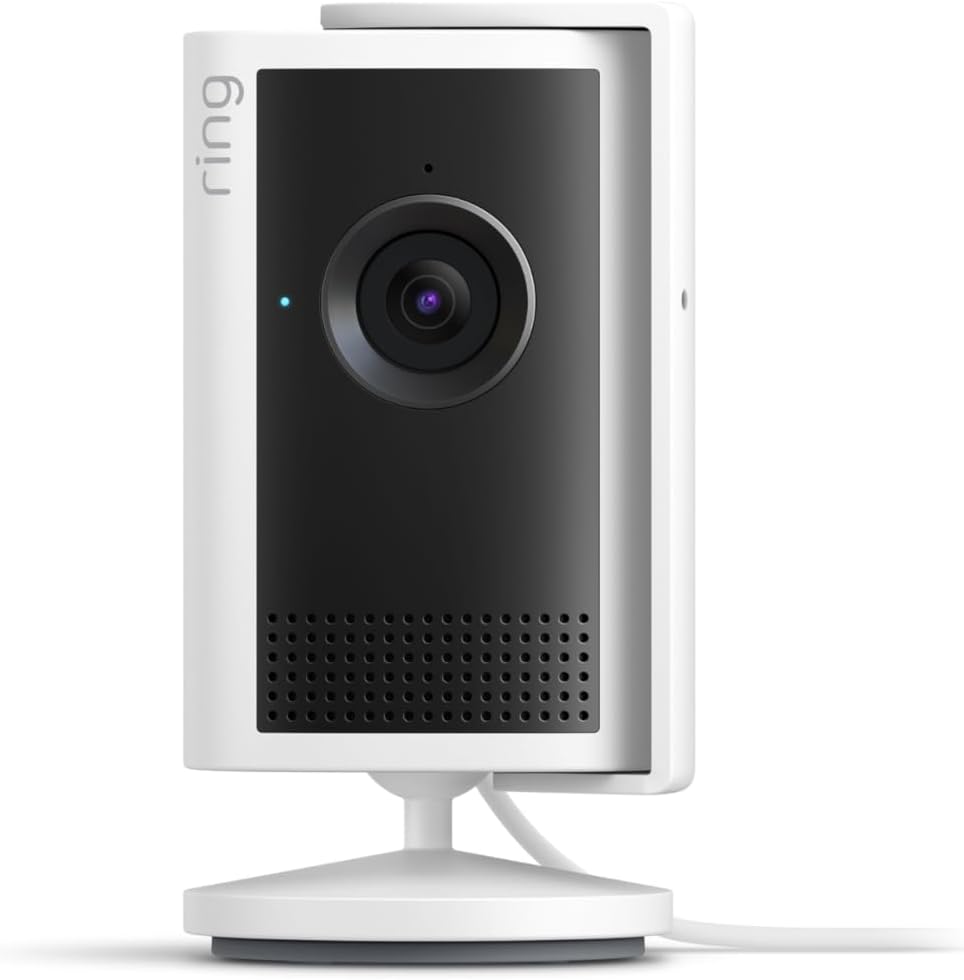
The Ring Indoor Cam earns its place if you've already built your reptile room around Alexa routines. It pairs neatly with Echo devices to announce UVB-on and UVB-off events, push motion alerts to your phone when your tortoise emerges from the hide, and integrate with Ring's broader ecosystem if you also have outdoor cameras watching a garden tortoise pen. The 1080p resolution is the weakest in this lineup for growth tracking, but the privacy shutter and tight integration with Amazon's smart home stack make it the easiest plug-and-play option. Note that meaningful clip history requires a Ring Protect subscription. See the Ring Indoor Cam on Amazon.
4. Blink Mini 2K+ — Best Compact Pick for Tight Vivarium Spaces
The Blink Mini 2K+ is tiny enough to mount on a shelf bracket just above the enclosure rim without obstructing the basking lamp or the screen top. The 2K sensor is a clear step up from the original Blink Mini and handles UVB highlights better than most budget cameras thanks to improved HDR processing. When paired with a Blink Sync Module 2 and a USB drive, you get local storage without ongoing fees. This is a particularly good pick for keepers running multiple enclosures because the Blink ecosystem scales cheaply to four or six cameras on a single Sync Module. Check the Blink Mini 2K+ on Amazon.
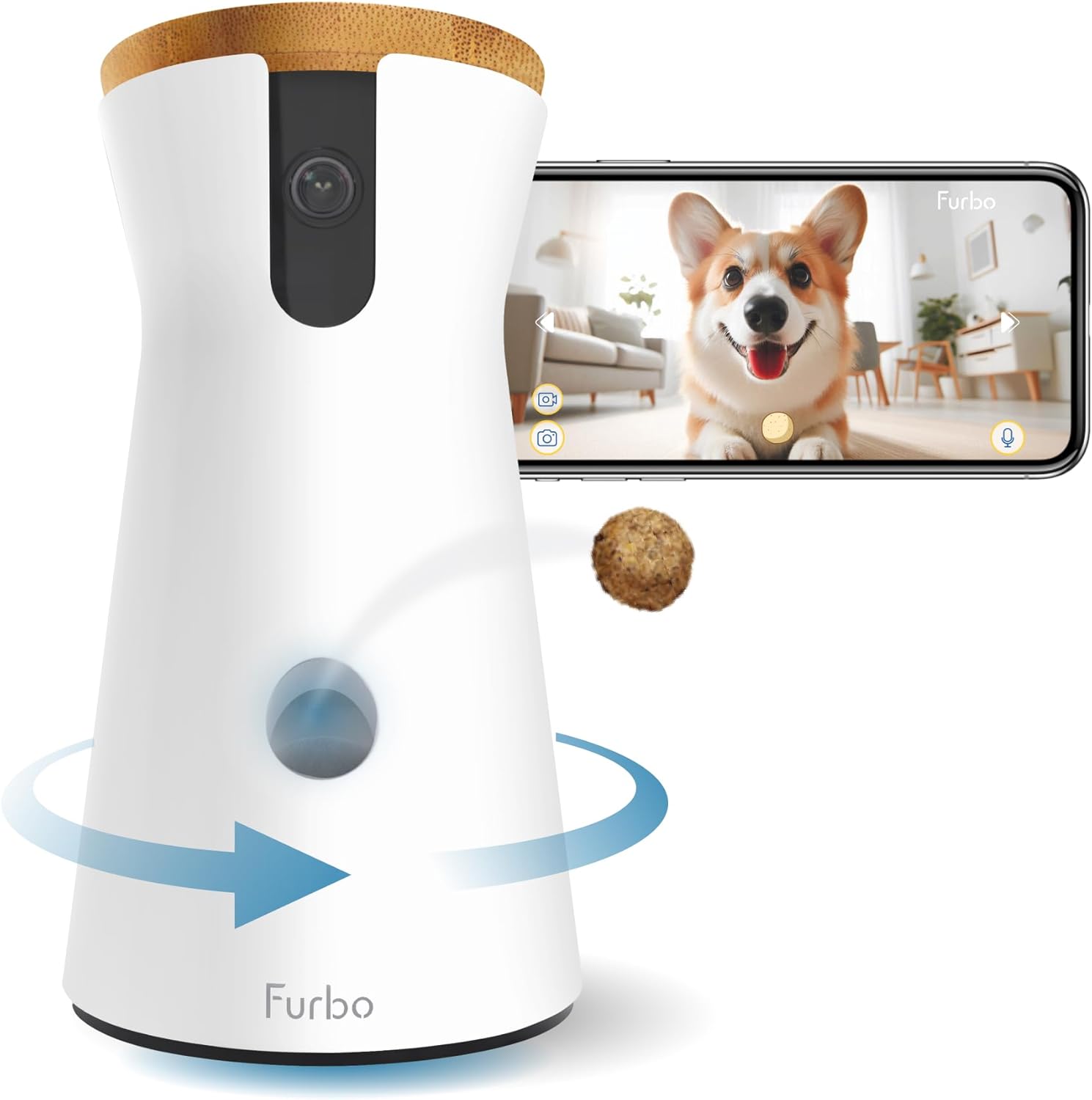
5. Furbo 360° Dog Camera — Best for Dual-Pet Households
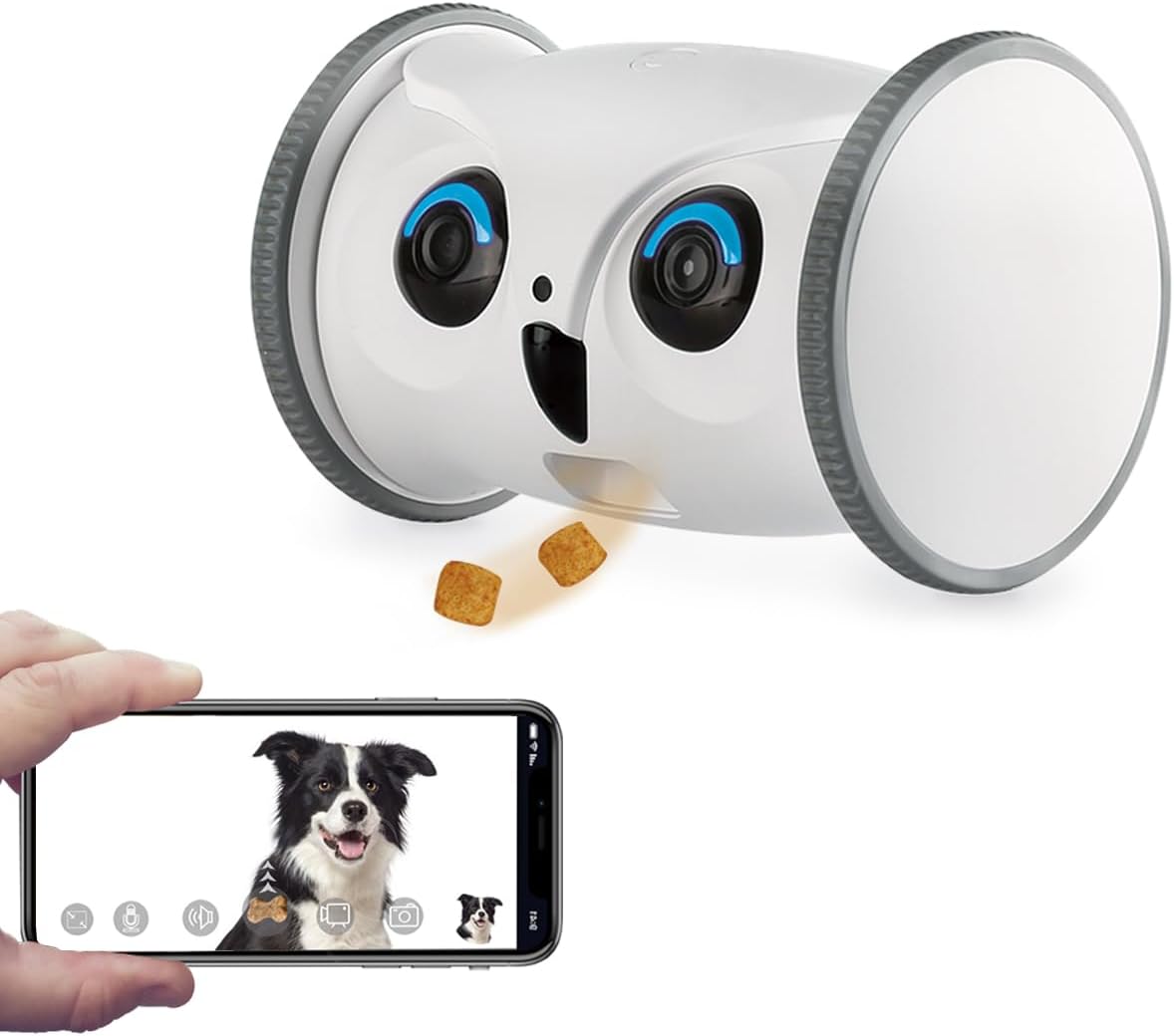
The Furbo 360° is built for dogs, but if you keep a tortoise in a living room shared with a dog or cat, it's a clever way to monitor both. The 360° rotation tracks movement automatically, so it'll swing toward your tortoise when it emerges to bask and back to your dog when it wanders by. The treat-toss feature is irrelevant to reptiles, of course, but the barking alerts can warn you if your dog is harassing the tortoise enclosure while you're away. 1080p limits its usefulness for fine shell measurement, so treat it as a behavior camera rather than a growth-tracking tool. View the Furbo 360° on Amazon.
How to Set Up Your Pet Camera for Tortoise UVB Lamp Tracking
Placement matters more than spec sheets. Mount the camera roughly 12 to 24 inches above the enclosure rim, angled down at about 30 to 45 degrees, with the basking spot in the upper third of the frame and the substrate filling the rest. This composition gives you a clear view of the lamp glow (so you can visually confirm it's on) and the tortoise's full body during basking. Avoid pointing the lens directly at the UVB tube, since reflected UV can degrade some plastics and the bright tube will blow out exposure.
For growth documentation, set a recurring weekly time-lapse on the same weekday and time. Many of our recommended cameras support scheduled recording, but you can also just save a still frame manually. Keep the camera and substrate level marker (a ruler taped to the back wall works well) in identical positions so weekly frames are directly comparable. For more on setting up reliable reptile monitoring, see our guide on best pet cameras for reptile enclosures and our deep dive on configuring time-lapse for growth tracking.
Common Mistakes to Avoid
The biggest mistake we see is mounting the camera inside the enclosure where heat and humidity will shorten its life dramatically. Always mount externally and shoot through the screen top or open lid. Second, don't rely on motion detection alone for UVB cycle tracking. Tortoises move slowly, and many cameras simply won't trigger on their movement. Use scheduled recording instead. Finally, don't trust automatic night mode in a reptile room. IR illuminators on most cameras peak around 850nm, which won't disturb your tortoise's sleep cycle, but auto-switching can confuse the exposure when a heat lamp is running with the UVB off. Lock the camera into color mode if your room has consistent ambient light.
Frequently Asked Questions
Can a regular indoor security camera really track UVB bulb cycles?
Yes, indirectly. Cameras can't measure UV output, but they can confirm visually that your fluorescent or mercury vapor lamp ignites on schedule and stays lit throughout the photoperiod. Pair the camera with a Solarmeter 6.5 reading every 90 days for actual UVB output verification, and use the camera footage to catch the moment a bulb fails to start or flickers out early.
What camera resolution do I need to see tortoise shell growth?
For meaningful month-over-month scute growth tracking on a juvenile tortoise, 2K (1440p) is the practical minimum, and 4K gives you measurable headroom. At 1080p you'll see general shell condition but won't reliably resolve the 1–2mm of new keratin that appears at scute boundaries during active growth periods.
Will the heat from a basking lamp damage my pet camera?
It can, if the camera is mounted directly under or beside the bulb. Most consumer indoor cameras are rated for ambient temperatures up to about 104°F. Mount the camera above and offset from the basking zone, ideally outside the enclosure looking down through the screen top, and you'll stay well within safe operating temps.
Do I need a subscription to record continuous footage of my tortoise?
No. The eufy E30, Tapo 2K, and Blink Mini 2K+ all support local storage via microSD or a USB drive on the Sync Module. Only Ring and Furbo lock meaningful clip history behind subscriptions, which is worth considering if you plan to archive months of growth footage.
How do I capture clear footage when the UVB lamp is very bright?
Use a camera with HDR support and manually lock the exposure if possible. Position the lens so the bulb itself is just outside the frame; capture the lit basking spot instead of the bulb directly. The eufy E30 and Tapo 2K both handle high-contrast scenes better than the older Ring and Furbo sensors.
Can I use my pet camera to monitor enclosure temperature too?
Not directly, but you can include an analog thermometer and hygrometer in the camera's field of view and read them remotely from the live feed. This is a popular technique among reptile keepers and works especially well with the 4K eufy E30, where the gauge needles are easily readable. For broader monitoring setups, our guide to pet monitors for exotic pets covers dedicated temperature and humidity sensors.
Is two-way audio useful for tortoise monitoring?
Honestly, no. Tortoises don't respond to voice commands and loud audio can stress them. Two-way audio is a nice-to-have if the same camera also watches a dog or cat, but it shouldn't drive your buying decision for a reptile-only setup.
Final Recommendation
For most tortoise keepers in 2026 who want a serious pet camera for tortoise UVB lamp tracking and shell growth documentation, the eufy Security 4K Indoor Camera E30 is the clear winner. It pairs a high-resolution sensor with subscription-free local storage and pan/tilt flexibility, which is exactly the combination this niche use case demands. Budget-conscious keepers should reach for the Tapo 2K Pan/Tilt, which delivers most of the same workflow at a much lower price. Whichever you choose, commit to consistent placement and a weekly time-lapse routine—the camera is only as valuable as the data you let it accumulate.
Key Takeaways
- Choosing the right pet camera for tortoise UVB lamp tracking means matching capacity and output ports to your actual devices
- Always check actual watt-hours (Wh), not just watts — runtime depends on Wh, not peak output
- Also covers: tortoise enclosure camera UVB monitoring
- Also covers: reptile camera for shell growth tracking
- Also covers: tortoise basking lamp camera
- Compare price-per-Wh across models to find the best value for your budget