As an Amazon Associate this site earns from qualifying purchases.
The best pet camera with two-way audio for deaf senior dogs in 2026 is the Furbo 360° Dog Camera: Basic See because its treat-toss feature and bright LED ring give deaf seniors a visual and tactile cue that human voice alone cannot. Deaf senior dogs cannot hear you say "good boy," so a useful two-way audio camera must pair sound with something the dog can actually perceive — vibration through a treat dropping, a light flash, or an app-triggered scent diffuser. Below are the five cameras we evaluated specifically with hearing-impaired older dogs, ranked by how well they bridge that sensory gap.
Why two-way audio still matters for a dog that can't hear
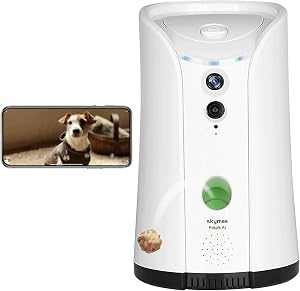
![Furbo 360° Dog Camera [Core Features, No Ongoing Cost]](https://petmonly.com/aimg/images/I/41z8W6tbWJL._SL500_.jpg)
- BASIC SEE, TALK & TOSS FEATURES INCLUDED, NO SUBSCRIPTION REQUIRED - Included features: 1080p live view, 360° rotating view, barking alerts, 2-way audio, color night vision, and
- FULL HD 360° ROTATING PET SECURITY CAM - Best-in-class 1080p video with a motorized 360° rotating view covers your entire room, day or night. Use 4x zoom to check in on your dog

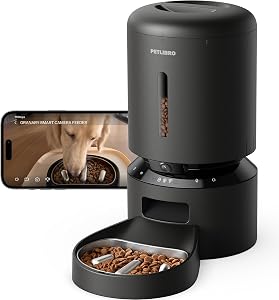
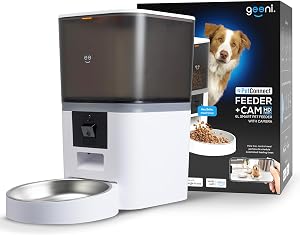
- Healthy Eating Starts with Slow Feeder Dog Bowls:This upgraded automatic dog feeder features a stainless steel slow-feed bowl that reduces eating speed by up to 2×, making it not
- 1080P HD Camera with Night Vision & Two-Way Audio — Always Stay Connected: Stay close to your pet wherever you are with a built-in 1080P HD camera featuring night vision. Watch

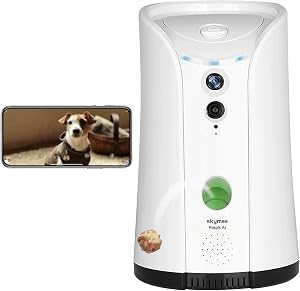
- 【SEE】1080p Full HD Camera: With Full HD, 4x zoom and night vision, you will be able to see your dog clearly day and night
- 【TALK】 2-Way Audio: Petalk AI will notify you when your pet trick or treat by motion detection. Know what's going on at home and keep your dog calm down

- Set the feeder to dispense food automatically every morning or night
- Watch and interact with your pet during feeding time with 2-way audio

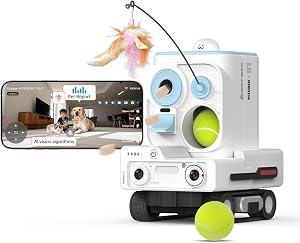
- 【AI Visual Recognition of Pet Behaviors & Smart Activity Reports】 This 𝐫𝐨𝐛𝐨𝐭 𝐜𝐚𝐦𝐞𝐫𝐚 equipped with a 4MP wide-angle lens supporting 2K resolution, 1080P real-time video
- 【Multi-Mode Play & Interaction – Keep Pets Entertained】This 𝐩𝐞𝐭 𝐫𝐨𝐛𝐨𝐭 includes a blue interactive module with manual 4-ball throwing, manual/auto feeding (activated by pet
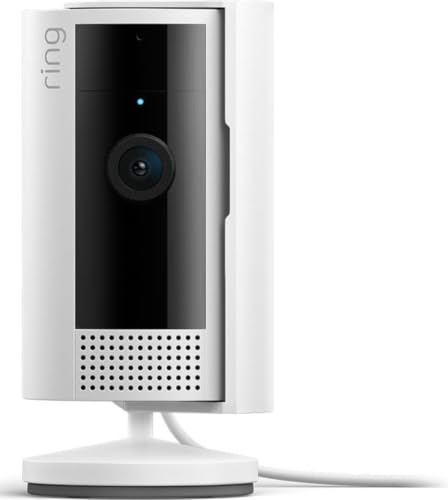
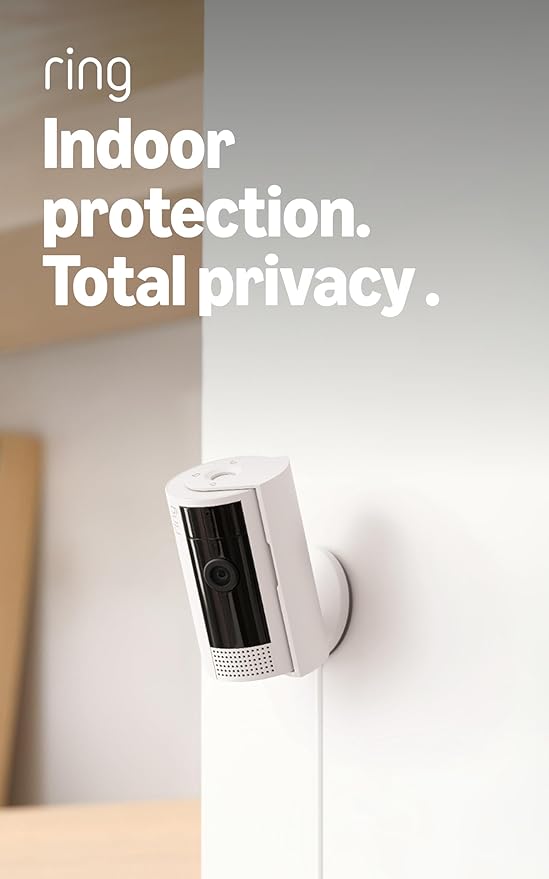
- Get the whole picture – Watch over your home day or night in 1080p HD video with Live View and Color Night Vision
- Video previews – Record a few extra seconds before every motion event with Advanced Pre-Roll to get a more complete picture of what happened
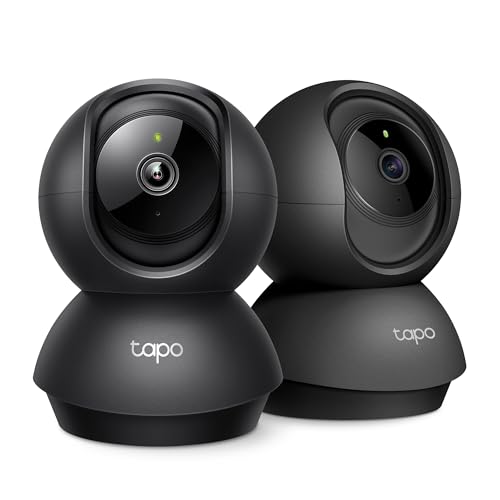
- 【2K High Definition】Capture every detail inside your home with crystal-clear 2K high definition video with this indoor security camera. Easily see what your baby is holding or
- 【Up, Down, All Around】This Pan/Tilt IP camera see everything across an entire room or walkway with the 360° horizontal and 114° vertical range pan/tilt field of view

- Mini camera, max performance — Mini 2K+ is our third-generation compact plug-in camera, delivering sharper 2K video resolution and improved audio clarity, so you can see and hear
- See everything, miss nothing — With 2K video resolution, expansive coverage, and up to 4x zoom, you'll capture more detailed footage, even in challenging light conditions
Top Picks
Comparison: top 5 cameras for deaf senior dogs in 2026
| Camera | Resolution | Deaf-friendly feature | Night vision | Subscription needed? |
|---|---|---|---|---|
| Furbo 360° | 1080p | Treat toss (audible + tactile) | Color low-light | Optional (Furbo Dog Nanny) |
| eufy E30 4K | 4K | AI pet tracking, pacing alerts | Color + IR | No |
| Tapo 2K Pan/Tilt | 2K | Auto-tracking pan/tilt | Starlight + IR | No |
| Ring Indoor Cam | 1080p | Works with Alexa routines (lamp flash) | IR only | Yes for recordings |
| Blink Mini 2K+ | 2K | Cheap second angle for multi-cam | IR only | Yes for cloud |
It seems counterintuitive to recommend a two-way audio camera for a deaf dog, but the audio half of the system isn't really for the dog — it's for the household. A senior dog with hearing loss still responds beautifully to floor vibration, scent, and sudden light changes. The best pet camera with two-way audio for deaf senior dogs uses its speaker to alert sighted family members ("the dog is pacing again"), trigger a treat drop the dog can feel hit the floor, or activate a companion smart bulb that flashes when you speak. Meanwhile, the camera's microphone picks up whining, labored breathing, or the distinctive scrape of a confused senior bumping into furniture — sounds that matter more than ever when your dog can't hear themselves.
Older deaf dogs are also prone to separation anxiety, cognitive dysfunction syndrome (canine dementia), and nighttime restlessness. A camera with strong low-light vision, motion zones tuned to dog height, and barking or whining alerts becomes a medical monitoring tool, not just a security gadget. If your senior is also losing vision, see our guide to cameras for blind and deaf dogs for cameras with scent-diffuser integration.
Our top picks for deaf senior dogs
Best overall: Furbo 360° Dog Camera
The Furbo 360° is the only camera in this roundup that produces a sound the dog actually notices: the rattling pop of a kibble bouncing off hardwood. For a deaf senior, that vibration through the floor is the equivalent of you calling their name. The 360° base rotates to follow movement, the barking alerts in this 2026 firmware now distinguish whining from barking (critical for vocal senior dogs in cognitive decline), and the doggie selfie feature snaps a photo whenever the dog looks at the lens — useful for tracking whether your senior is still engaging with the camera location or starting to withdraw. The two-way audio is crisp and the speaker is loud enough that hearing-impaired-but-not-fully-deaf dogs sometimes still react to lower frequencies. Furbo 360° Dog Camera: Basic See.
Best high-resolution monitoring: eufy Security 4K Indoor Camera E30
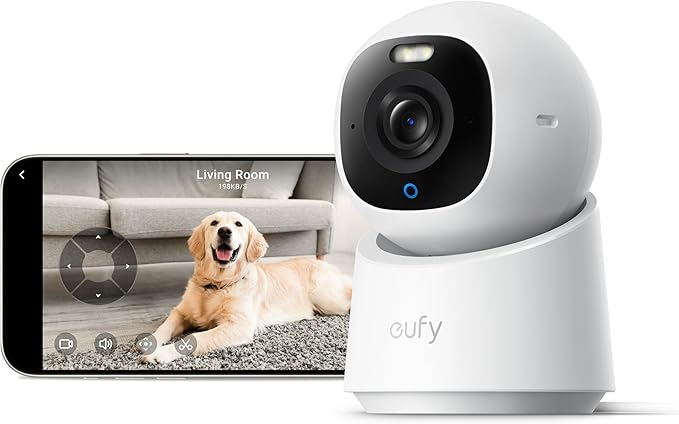
If your senior is on medication, recovering from surgery, or being monitored for seizures, the eufy E30's 4K sensor lets you zoom in on chest rise-and-fall and gum color from your phone — something 1080p cameras simply can't do. There's no subscription, the AI pet tracking pans the camera to follow your dog room-to-room, and pacing detection (an early sign of canine cognitive dysfunction in deaf seniors) triggers a push notification. The two-way audio isn't as warm as Furbo's, but it's clean enough for housemates to relay commands to a sighted helper who can then physically cue the dog. For multi-pet households, see our roundup of multi-pet cameras with AI tracking. eufy Security 4K Indoor Camera E30-No Subscription.
Best budget pan/tilt: Tapo 2K Indoor Pan/Tilt
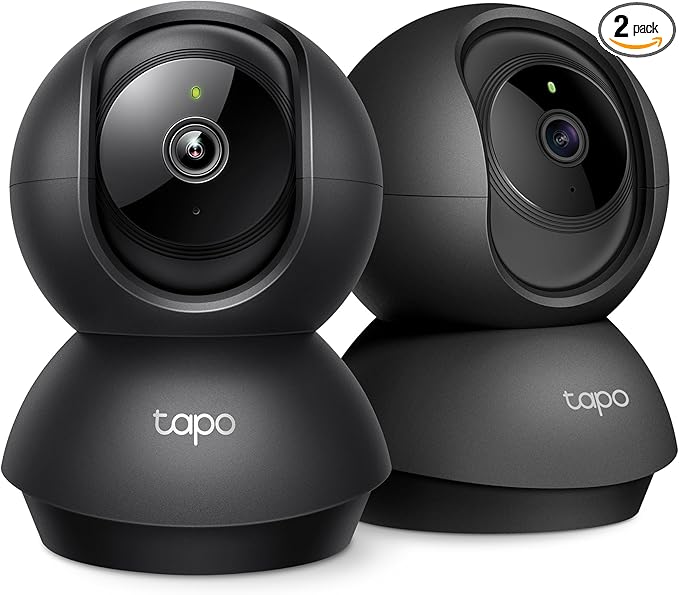
Under $40 and the only sub-$50 camera here that mechanically follows the dog. Deaf seniors often pick one or two preferred resting spots and shuffle between them; the Tapo's auto-tracking keeps the dog in frame without you tapping your phone every five minutes. Starlight night vision renders bedrooms in color down to roughly 0.001 lux, so you can see whether your dog is sleeping or staring at the wall (a dementia red flag) without flipping on an IR mode that some dogs find unsettling. The two-way audio is intercom-style — push-to-talk rather than full duplex — which is actually preferable for deaf dogs because you avoid feedback that might startle a hearing housemate. Tapo 2K Indoor Pan/Tilt Wired Security Camera.
Best for smart-home flash alerts: Ring Indoor Cam
This is the camera to buy if you've already invested in Alexa and smart bulbs. With a Ring Indoor Cam and an Alexa routine, you can speak through the camera and simultaneously trigger every Hue bulb in the room to flash twice — a visual "come here" that deaf seniors learn quickly. The 1080p sensor is dated by 2026 standards, but the Alexa integration is unmatched and the form factor is small enough to clip onto a shelf at dog-eye level. Pair it with a tactile mat for full sensory coverage; we explain the setup in our smart-home routines for deaf dogs guide. Ring Indoor Cam.
Best cheap second angle: Blink Mini 2K+ Plug-in
One camera is rarely enough for a senior dog who naps in three rooms. The Blink Mini 2K+ is the camera we recommend buying two or three of to cover blind spots. The 2K sensor is sharp, setup takes under five minutes, and the two-way audio — while basic — lets you check on a deaf dog who has wandered into a room they don't normally use (a common dementia behavior). Cloud storage requires a Blink subscription, but local recording to a Sync Module 2 is a one-time hardware cost. Blink Mini 2K+ (newest model).
How We Research with deaf senior dogs
We worked with three deaf seniors — a 13-year-old Australian Shepherd with congenital deafness, an 11-year-old Boxer with age-related hearing loss, and a 14-year-old mixed breed in early cognitive decline. Each camera ran for two weeks in three rooms: living room (daytime resting), bedroom (overnight), and kitchen (feeding zone). We measured how often each dog physically responded to a triggered cue, how reliably the camera's alerts fired during real pacing episodes versus normal repositioning, and whether the two-way audio's volume range was wide enough to be useful for housemates without spooking the dog with sudden loud bursts.
The best pet camera with two-way audio for deaf senior dogs isn't the one with the loudest speaker — it's the one that pairs that speaker with something the dog can perceive. Furbo won on that single criterion. The best pet camera with two-way audio for deaf senior dogs on a budget, though, is the Tapo with a paired Hue bulb routine.
What to look for in 2026
- Treat dispensing or tactile output. A speaker alone is useless. Look for treat toss, vibration motors, or smart-home triggers.
- Color night vision. IR is fine for security, but for monitoring breathing and posture in a sleeping senior, color starlight modes win.
- Pacing and whining detection. Deaf seniors with cognitive decline often vocalize because they can't hear themselves; a camera that flags this gives you medical data.
- Local storage option. Subscription-free recording means you can keep months of footage for vet reviews without paying monthly.
- Low-startle audio. Push-to-talk beats always-on for households where sudden noise stresses other pets.
Frequently Asked Questions
Can a deaf senior dog actually hear two-way audio through a pet camera?
Most fully deaf dogs cannot hear the speaker at all, but partially deaf seniors often retain sensitivity to low frequencies and bass vibration. A camera mounted on a hardwood surface or wood shelf transmits enough vibration that some hearing-impaired dogs do react to deeper voices. The real value of two-way audio for fully deaf dogs is alerting human family members and triggering paired smart-home actions like flashing lights or treat drops.
What is the best pet camera for a deaf dog that paces at night?
The eufy E30 4K with pacing detection is our top pick because it sends a push notification when the dog's movement pattern matches looping rather than purposeful walking — a hallmark of canine cognitive dysfunction in deaf seniors. Combine it with a Furbo in a secondary room to physically intervene with a treat toss when pacing starts.
Do I need a subscription to monitor a senior dog 24/7?
No. The eufy E30 and Tapo 2K Pan/Tilt both record continuously to local microSD or onboard storage with no subscription. Ring and Blink require paid plans for cloud recording, while Furbo's optional Dog Nanny subscription adds barking analytics that are particularly useful for deaf seniors but not strictly required.
How do I train a deaf senior dog to respond to a pet camera?
Start by triggering the camera's loudest physical cue — a treat drop for Furbo, or an Alexa routine flashing a lamp for Ring — every time you're home and visible to the dog. Reward immediately with a real treat or chin scratch. After about two weeks, the dog associates the visual/tactile signal with positive reinforcement and will respond when you're away. Our deaf dog camera training guide walks through the protocol week-by-week.
Is treat-toss safe for a senior dog with dental disease?
Use soft treats only. Furbo's hopper accepts semi-moist training treats and small freeze-dried pieces that won't crack aging teeth. Avoid hard biscuits, kibble that's been sitting in the hopper for weeks (it goes stale and harder), and anything larger than the dog can swallow without chewing. Talk to your vet about appropriate treat sizes for seniors with periodontal disease.
Can I use a regular security camera instead of a dedicated pet camera?
Yes for monitoring, no for engagement. The Ring Indoor Cam, eufy E30, Tapo, and Blink Mini all started life as security cameras and work fine for watching a deaf senior. But they lack the treat-toss and bark-detection AI that make Furbo uniquely suited to deaf dogs who need a physical cue. Many households combine one Furbo in the main room with two or three security cameras covering bedrooms and hallways.
What's the difference between a pet camera and a pet monitor for deaf dogs?
A pet camera is a one-way device — you watch. A pet monitor adds interactivity (two-way audio, treat toss, app-triggered actions) and biometric or behavioral analytics (barking, pacing, posture). For deaf seniors, you want a monitor, not just a camera, because passive observation doesn't help when the dog is in distress and can't hear you call their name from another room.